Articles about satellite phones, equipment and satellite communications.
Inmarsat, Iridium, Thuraya, Globalstar
Satellite Communication for Mountain Hiking. Choosing a Satellite Phone for Hiking.
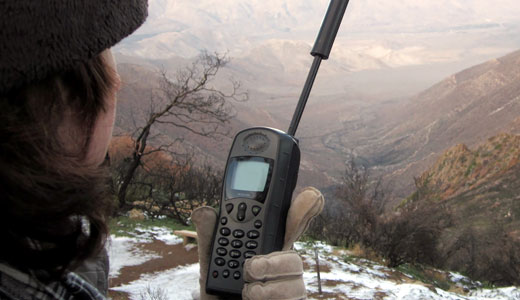
Nowadays, mountain hiking enthusiasts are quite autonomous, and having reliable communication during a hike is becoming increasingly important.
Even in popular places like Crimea or the Carpathians, mobile coverage often ends right after the foothill villages. The only alternative means of communication — both for emergencies and for constant contact — is satellite communication.
Why might you need communication where there is none?
If we are talking about more than a two-day walk in the mountains, it is worth relying on two factors:
As you can see, it makes sense to play it safe and have communication at hand. We will leave the ethical side of choosing between spending on communication and possible troubles in its absence outside the scope of this article. We can only say one thing: you can always rent a satellite phone. For a group of 5-6 people on a 7-day hike, this pleasure will cost $20–30 per person. Agree, this is not such a big expense for your own safety.
For hikes of any kind, Iridium satellite communication and the operator’s products are most often used: the Iridium 9575 Extreme (for difficult and even extreme conditions) or the Iridium 9555. Iridium is chosen due to the features of its satellite constellation, which allows communication to be used in any conditions.
Therefore, let’s look at the features of Iridium communication. The Iridium satellite constellation consists of 66 low-orbit satellites. This feature improves communication quality and increases coverage. Iridium works without problems in forests and mountainous areas. Even in a narrow gorge with very limited sky visibility, you can catch a signal when a satellite passes overhead (a satellite goes from horizon to horizon in about 15 minutes) and make a call or send a distress signal.
The functionality of the Iridium 9575 and 9555 phones does not differ dramatically, but the 9575 has three main advantages:
Regarding phone maintenance: there is no mandatory subscription fee, but vouchers (airtime packages) have an expiration date, after which the remaining balance is burned. This is the only limitation with which Iridium motivates customers to purchase new vouchers. You can view Iridium satellite communication tariffs here.
An alternative option is Thuraya satellite communication. Thuraya phones and communication costs are cheaper, but it has a number of limitations when used in mountainous terrain:
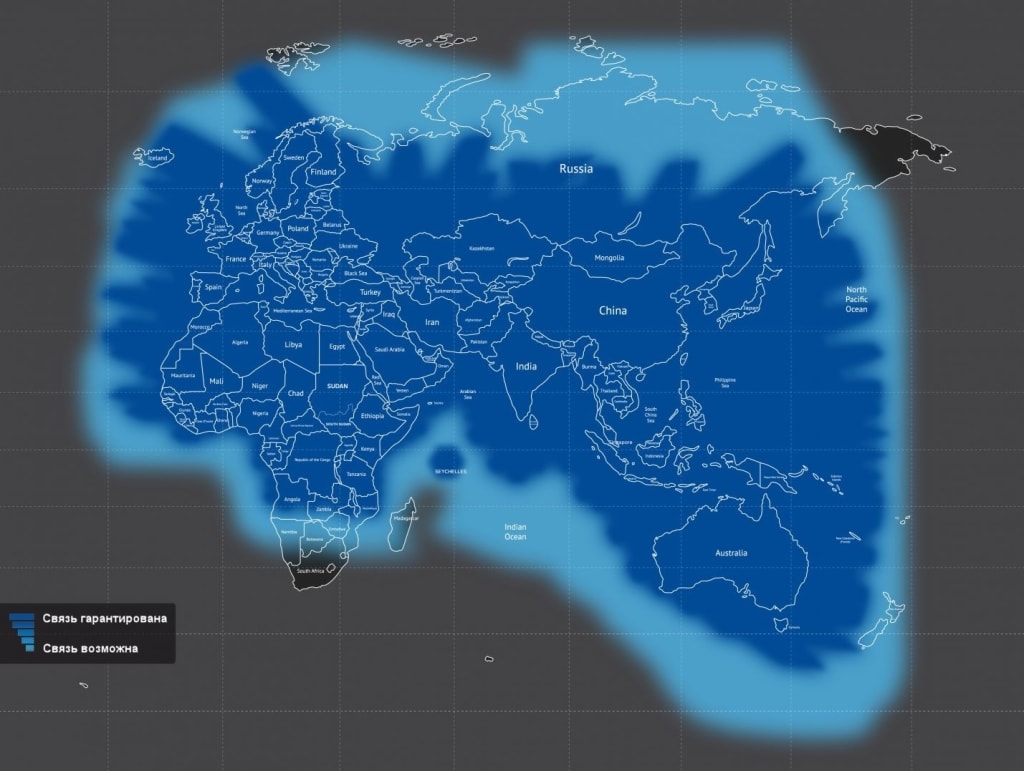
We do not recommend using Thuraya on difficult hikes where a missed call can cost lives, but on simpler hikes Thuraya has proven itself very well due to its attractive tariffs. Vouchers have no expiration date, and the SIM card is valid for 2 years. One top-up of 50–100 minutes may be enough for several hikes over two years.
The cost of Thuraya satellite phones is also 20–30% lower than Iridium. According to our customers’ feedback, the Thuraya phone performed excellently on mountain hikes in Crimea, the Central Caucasus, and the Elbrus region.
The ideal option for a hike would be the Thuraya XT PRO DUAL or Thuraya XT Lite. These phones are practical, protected, and have sufficient functionality. In addition, the Thuraya XT PRO DUAL is equipped with a GSM module and a slot for a regular SIM card — this allows you to use cellular communication where possible and switch to satellite when necessary.
In summary, Iridium is the most reliable and widely used option for communication in the mountains, especially on difficult routes. However, it is also the most expensive both in maintenance and equipment cost. Although Thuraya has some limitations, due to its cheap tariffs it can be used on simple hikes as an alternative means of communication.
A very convenient feature available from all satellite operators is the ability to send free SMS, which allows the contact person to send weather reports and route adjustment recommendations completely free of charge.
We will be happy to consult you on satellite communication issues and select the right equipment for your specific task. Just contact us in any convenient way listed in the Contacts section.