Articles about satellite phones, equipment and satellite communications.
Inmarsat, Iridium, Thuraya, Globalstar
The Most Affordable Satellite Phone in Ukraine and Europe

In the modern world, the issue of secure communication is very acute. The market offers all possible solutions: unlistenable SIM cards, encrypting equipment, unlistenable phones. But as we know, there is no ideal protection system, and this also applies to communication systems. So how can we best protect ourselves from information leakage?
When using traditional mobile communication or the Internet, there is always an intermediary between subscribers — the communication provider that connects calls and through which all data passes. Using mobile communication as an example, it works as follows: Subscriber 1 → cellular towers/terrestrial networks → data center → cellular towers/terrestrial networks → Subscriber 2. The same applies to internet communication. The most vulnerable point in this chain is the passage of the signal in the data center and cellular towers. It is there that it is easiest to intercept the necessary data, and the subscribers may not even suspect it, unlike direct eavesdropping, which can be detected. Even if your device encrypts the data, it can still be intercepted because it still passes through local terrestrial networks, and for any lock there is always a crowbar.
Moreover, communication operators not only pass data through themselves connecting subscribers, but also analyze it. The work of analyzers is similar to the work of a medical MRI that looks inside the human body without physical intervention. Thus, it is possible to easily extract exactly the necessary data from the entire data flow. Also, the generally accepted world practice is the operator transferring all data about the subscriber upon request from law enforcement agencies. In our country, as is known, the request may not necessarily come from law enforcement agencies, not necessarily officially, and not necessarily a request at all.
It turns out that to maximally protect your data, you need to get rid of the "intermediary". At the moment, only satellite communication systems offer minimal participation of the "intermediary" and terrestrial networks when connecting subscribers.
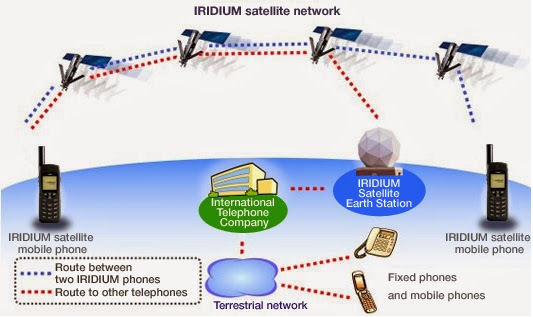
The satellite communication system works in a similar way. When calling from a satellite phone to any landline/mobile phone in the world, the signal goes from the satellite phone to the satellite and from the satellite through the data center via terrestrial networks to the called subscriber. Although the signal is encrypted according to the AES 256 standard, as already mentioned, for any lock there is always a crowbar.
A radically different situation occurs when calling from one satellite phone to another satellite phone. In this case, the signal does not touch the ground at all and passes directly through the satellites to the called satellite phone. Only technical data goes to the ground, to the data center, such as: call duration (to debit the cost of the call from the account) and geo-position with accuracy to the continent (in some tariffs the cost of a call in different parts of the world may differ). Thus, calls from one satellite phone to another satellite phone are practically impossible to eavesdrop on. Moreover, the signal from a satellite phone is not conical (like on mobile phones), but directional, which makes it almost impossible to eavesdrop on the phone with directional special means, because for this it is necessary to be in the signal zone, and this is only possible if you hover in the air above the phone in a helicopter or drone.
It is precisely because of the peculiarities of satellite communication operation that it is used not only as communication in remote areas of the planet where there is no terrestrial network coverage, but also as a secure communication channel and a phone protected from eavesdropping.
If you need to choose a satellite phone for your purposes or get a more detailed consultation — contact us in any convenient way listed in the Contacts section.